Introduction
The energy and industrial sectors are undergoing a transformation to achieve carbon neutrality. Beyond direct electrification, carbon-free hydrogen is emerging as an essential tool for decarbonizing “hard-to-abate” industries (steel, chemicals, cement) and heavy transportation (trucks, non-electrified trains, and maritime and air transport via e-fuels).
Here is an overview of the technical, economic and regulatory landscape, based on data from IFPEN, the IEA, and national and European strategies.
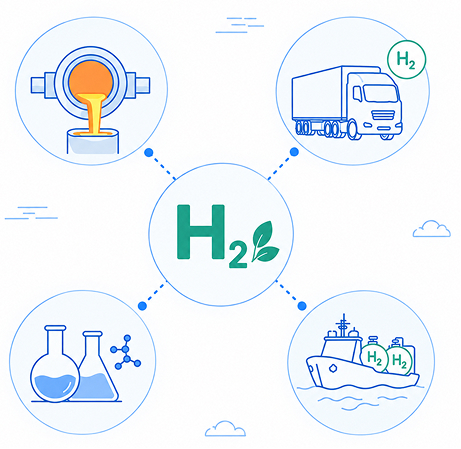
Definition and “Colors” of Hydrogen
Hydrogen is an energy carrier that is rarely found in its pure form in nature, at least on Earth surface. It is classified according to its production method and carbon footprint:
- Renewable Hydrogen (green): Produced by electrolysis of water using electricity from renewable sources (wind, solar, hydro). Its carbon footprint ranges from 0.5 to 2 kg CO₂eq/kg H₂.
- Low-Carbon Hydrogen (yellow/blue): Produced either by electrolysis using a mix of electricity that is predominantly nuclear (yellow), with a carbon footprint of 0.5 to 1.5 kgCO₂eq/kgH2 , or from natural gas with carbon capture and storage (CCUS) (blue); its carbon footprint is then 1.5 to 4 kg CO₂eq/kg H₂.
- Fossil Hydrogen (gray): Produced by steam reforming of methane without CO₂ capture, its carbon footprint ranges from 10 to 14 kgCO₂ eq/kg H₂. This currently accounts for the majority of production—70% of global output—and a sustainable alternative must be found for it.
- Fossil Hydrogen (brown/black): Produced by coal gasification, it has a carbon footprint of 18 to 24 kg CO₂eq/kg H₂. Although it accounts for only 25% of production and is less common than hydrogen derived from natural gas, it too must eventually be replaced by a lower-carbon solution.
- Native Hydrogen (white): A natural renewable resource continuously generated deep within the Earth’s crust through the interaction of water with iron-rich rocks, its direct extraction via drilling could offer a near-zero carbon footprint and potentially low production costs. Although promising, its large-scale exploitation still faces significant challenges in exploring and mapping global deposits.
Uses and Prospects for Carbon-Free Hydrogen
Hydrogen has applications in several strategic sectors:
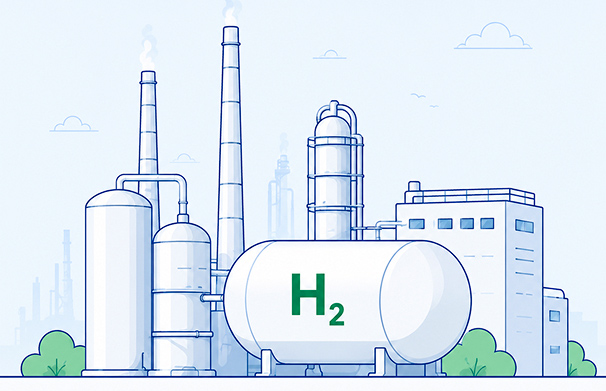
Industry (current use, predominant, up to 95%)
Hydrogen is already widely used in oil refining and in the production of ammonia for fertilizers. The challenge is to replace grey hydrogen with decarbonized hydrogen.
New applications are emerging, such as the direct reduction of iron ore in the steel industry to produce green steel.
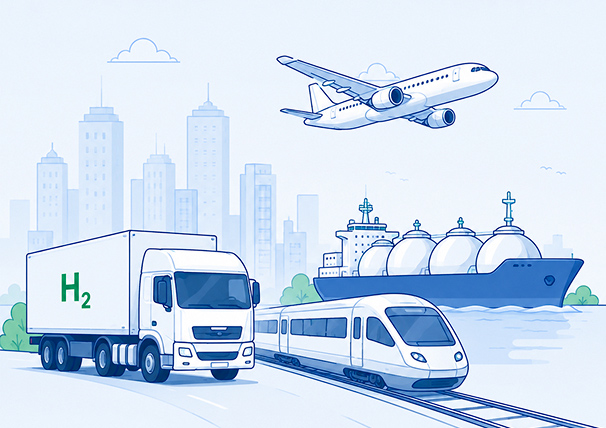
Heavy and Intensive Mobility
- Land Transport: Hydrogen-powered fuel cells offer a range and refueling time similar to diesel for buses, garbage trucks, and long-haul trucks.
- Rail: A clean alternative for non-electrified lines where the cost of the necessary electrical infrastructure is not economically viable.
- Maritime and Aviation: Hydrogen serves as the basis for the production of e-fuels (e-methanol, e-kerosene, e-ammonia) through combination with captured CO₂.
Energy Storage
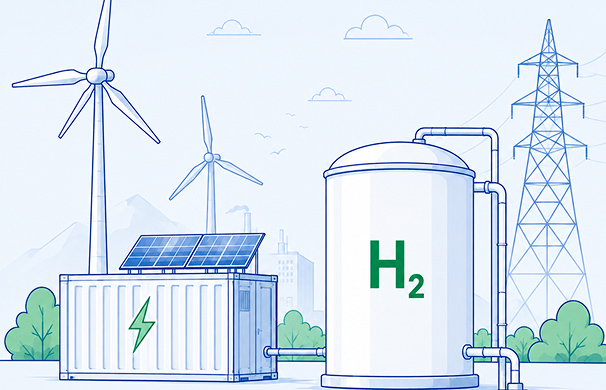
Hydrogen could enable the large-scale, long-term storage of excess intermittent renewable energy, acting as a buffer for the power grid (Power-to-Gas).
While batteries excel at day-to-day regulation thanks to their high efficiency, hydrogen could become the go-to solution for large-scale, seasonal storage at the power grid level. Its very low storage cost at scale makes it possible to store immense amounts of energy over long periods.
Outlook and Regulatory Framework
The European Union has set very ambitious targets through the Green Deal Industrial Plan and the RED III Directive, which mandates quotas for renewable hydrogen in industry (42% by 2030).
- AFIR Regulation: Requirement to install hydrogen refueling stations every 200 km along major European highways by 2030.
- European Hydrogen Bank: Implementation of auctions to subsidize production and bridge the price gap with fossil hydrogen.
- Expected Growth: IEA forecasts that global electrolyzer capacity could increase 50-fold by 2030 if all announced projects are implemented.
Advantages and Considerations
Advantages


Challenges


An Industry Under Construction: Challenges and Skills
The rise of hydrogen requires a transformation of industrial sectors. The processes involved (electrolysis, compression, liquefaction) demand specialized expertise.
Key skills to be mobilized:
- Engineering and Design: expertise in high-power electrolysis systems and fuel cells (materials chemistry, thermal management).
- Installation and Maintenance: technicians specialized in sealing (very small molecules), high pressure, and cryogenics.
- Safety and Risk (HSE): management of flammability and detection, specific ATEX standards.
- Economics and Strategy: analysis of carbon markets, structuring of power purchase agreements (PPAs), and technical and economic optimization of local ecosystems.
The hydrogen sector draws on the expertise of the oil and gas industry by building on its long-standing know-how. There are numerous bridges between the two fields: a technician familiar with natural gas networks can, after specialized training, transition to the hydrogen sector.
Key Takeaways
- Hydrogen is a carrier, not a source: its value depends entirely on how it is produced (renewable or low-carbon).
- Priority targets: heavy industry and long-distance transportation, where batteries reach their limits.
- Industrial challenge: Success depends on the widespread availability of low-cost, decarbonized electricity and the rapid training of thousands of professionals.

About IFP Training
We support energy sector stakeholders through this transformation with dedicated programs:
-
Hydrogen Chain Outlook: To give the overall elements allowing to understand and to anticipate the stakes of the development of hydrogen as a solution to the energy transition: decarbonization of the industry, transport as well as the storage of renewable electricity.
Access the program: Hydrogen Chain Outlook -
Introduction to hydrogen compression: This course gives the key points of hydrogen compression and compressors operation, no matter the use (hydrogen production, transportation, storage, end use).
Access the program: Introduction to hydrogen compression -
Hydrogen and Helium: from Exploration & sampling to valorization This course provides participants with a clear understanding of Hydrogen and Helium specificities, and also a practical knowledge on sampling and valorization challenges of these two chemical species.
Access the program: Hydrogen and Helium: from Exploration & sampling to valorization

Contact us to discuss your needs and develop a training plan tailored to your technical teams (R&D, testing, production)